
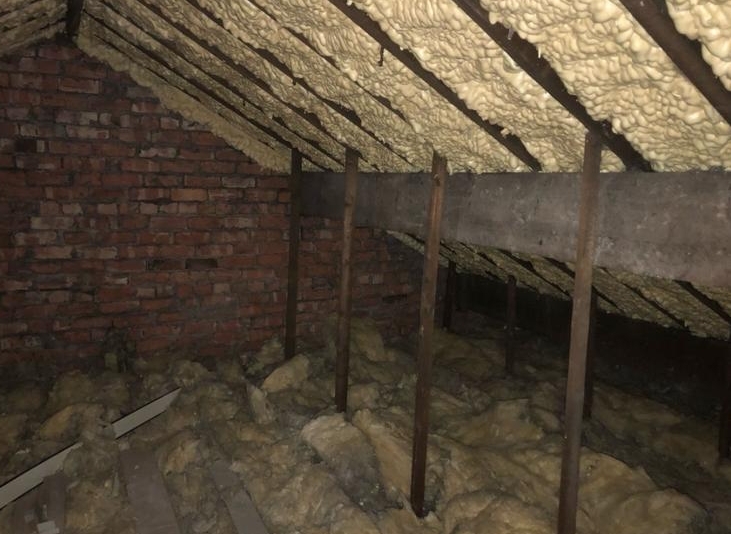
Spray foam is an increasingly common form of insulation applied to building structures. It consists of two key components, polyurethane resin and isocyanate, which when mixed results in a high temperature expanding foam that forms an airtight seal, also acting as a vapour barrier. Due to its unique properties, it has become a popular alternative to traditional insulation products such as loft rolls and batts, cellulose and fibre glass/rock wool. The advantages of spray foam insulation include its ease of application to any shape, size or texture, as it can be sprayed into any cavity and immediately bond with the surface. Because it forms a seal, there are no expansion gaps left behind, meaning better insulation properties. It can reduce noise pollution, improving the acoustic properties of a building. Initially, it was popular in agricultural settings, where it is applied to the roofs of barns and stables, preventing draughts and condensation. However, in recent decades, it has become popular in residential buildings, where it is installed in loft spaces, basements, between rafters and on external walls. Many companies promote its cost-effectiveness, claiming that energy savings achieved by using it pay back the cost of application in a short time. Recently it has also been used to remediate hard-to-treat cavities in buildings that store oil-fired plumbing and heating systems.
Understanding Spray Foam Insulation
Before we dive straight into the nitty-gritty details on removing spray foam insulation, we first need to have a look at what exactly spray foam insulation is and why people choose to use it. Spray foam insulation has become a well-known option to insulate buildings and spaces. It consists of two parts which, when combined together, create an expanding foam. When this foam expands, it fills any cavity, no matter how small, effectively creating a perfect airtight seal. Spray foam insulation can come in open cell or closed cell formats. Open cell spray foam is more affordable and is more flexible once it has cured. Closed cell spray foam is denser and therefore offers more strength and insulation value. Spray foam insulation is most customarily used to insulate lofts, attics, walls, and even floor spaces.
The airtight seal that spray foam insulation creates can drastically increase the energy efficiency of homes and other buildings, and some reports have indicated that properly insulating buildings can reduce heating bills significantly. People also utilize spray foam insulation for its ability to reduce noise from air or other sources. Additionally, spray foam can also help with other problems. Roofs, like everything else, don’t last forever, but they can be repaired in cases of leaks, cracks, or bubbling. With proper care and maintenance, roofs can last over 50 years! If these problems are addressed, but the house still has issues with excess moisture, mildew, or other growths, this can be due to insufficient insulation or even water vapor coming up from the interior. Air leaking in could also be due to poor insulation around pipes, wires, chimneys, and gutters.
Types of Spray Foam Insulation
When it comes to removing spray foam insulation, understanding the nuances of insulation types is essential to achieving the best outcome. Spray foam insulation is a material used to fill gaps and voids in various types of constructions. The main two categories of spray foam insulation are open-cell and closed-cell. Both kinds of spray foam are made up of polyurethane – a general-purpose thermoset plastic. The spraying process mixes ingredients together into a liquid that rapidly expands, fills a cavity, and solidifies. The composition of both spray foams is such that they are plastic, are low in thermal conductivity, but insulate-by-rapid-expansion differently based on their expansion method.
Open-cell spray foam insulation is approximately 30% less dense than closed-cell foam, which is partly why it is less expensive. To create the necessary properties of open-cell spray foam, manufacturers mix 15% to 30% or more of the blown gas into the formulation, which serves as a blown gas. In the open-cell foam, the cells are not sealed and can fill with air – which they do over time.
Closed-cell spray foam insulation, in contrast, has a density greater than 3 lbs/ft3; special formulations are sometimes used to achieve densities of greater than 4 lbs/ft3. To achieve these high densities, manufacturers make special formulations that have extremely tiny cells, and/or add more blown gas, which should be less than 3% of the foam formulation. This high density is what gives closed-cell foam its compressive strength and resistance to water vapour permeance. It also makes the insulation heat and moisture resistant, so that it can be made roof underlayment for low-slope roofs that cannot be vented.
Benefits of Spray Foam Insulation
Spray foam insulation is a popular choice among homeowners and builders due to its impressive performance characteristics. It is a very efficient insulator, and has a high R-value per inch of thickness. In addition to its thermal performance, it also absorbs sound and is therefore a great choice for soundproofing floors, ceilings, and interior walls. Spray foam insulation is also resistant to combustion, making it a good choice not just in housing but also in warehouses and factories where insulation is needed between spaces used for different purposes. Its vapour barrier properties also make it an ideal insulation product for use on re-roofing projects. It can also be used for thermal performance upgrades on buildings that already exist but need retrofitting. These factors aside, it can be quite messy to work with, and it is not a good choice for difficult-to-access spaces because repair and replacement can be tricky.
Whilst cellulose insulation breaks down over time and fiberglass insulation shrinks, spray foam insulation lasts for decades. Thanks to these long-term performance characteristics, it is far more cost-effective than other traditional forms of insulation and provides a much higher return on investment over its long lifespan. This is not only good for the homeowner from an economic viewpoint, but it means fewer resources are being used to produce insulation and create waste in the long term, making spray foam insulation an environmentally beneficial choice. Many manufacturers of spray foam materials have also implemented environmentally sustainable methods in the production of their goods that are much kinder to the environment, allowing you to insulate your home in an environmentally friendly manner.
Common Applications
Spray foam insulation is versatile and used in various applications, including the following.
Mainly two types of spray foam insulation are used in residential or medium-sized buildings: Low-density open-cell foam, used in interior walls and attics without ventilation; High-density closed-cell foam, used in exterior walls, attics, crawlspaces, and under-roof decks. Rapidity is spray foam insulation’s key advantage: it is applied directly on a surface, expands, fills gaps, and hardens within moments. Therefore, it is especially adjustable to small sections of buildings undergoing renovations. In addition, the insulating value range of the material (R-3.6 to R-7.0 per inch) indicates that the minimal thickness needed for achieving a certain value can be thinner compared to beefed-up framing construction, especially in cavities with irregular shapes and/or containing disruptions interfering with continuity with traditional insulation methods.
Low-density open-cell foam is cheap and commonly used for interior insulation of walls, especially in timber-frame houses. High-density closed-cell foam, which is more effective and moisture-resistant, is usually employed as an exterior insulator in the wall of timber-frame houses, or the wall and under-roof deck of any type of building, or, following an expert recommendation, the interior of walls without vapor barriers in moist regions where warm interior air would melt the wall assembly during winter or be absorbed by the traditional insulation during summer. Additionally, high-density foam can be sprayed on the roof’s exterior to allow a ventilated air space, thus achieving the dual function of insulation and roof membranes. As an alternative, low-density open-cell foam can be sprayed on the under-roof deck’s interior and left to dry—thus ensuring venting.
Reasons for Removal
There are many reasons that make spray foam insulation no longer suitable for a property, and therefore require removal. The most common causes are damage and degradation, health concerns, and building regulations compliance.
Damage and Degradation Like anything in a building, spray foam insulation can deteriorate in some way, and this deterioration can affect its performance as well as the performance and safety of the building conditions. This is often the case when the spray foam is not installed correctly or appropriately. For example, spray foam insulation is susceptible to water damage and frost damage. A roof leak or a wall leak may let water into the insulation, causing it to lose R-Value. In addition, any type of moisture contained in a property, including high humidity, can also impact the foam by causing it to break down. This, in turn, can lead to expensive expenses if the energy efficiency of a property is impacted. Also, moisture and oxidation can ruin the structural integrity of the insulation too. Crumbling and dusting are indications that the insulation is indeed becoming fragile or compromised. In this case, it may be necessary to remove it and reinstall it once the moisture issue is resolved.
Health Concerns Although open-cell spray foam is thought to remain “safer” during the curing process compared to closed-cell spray foam and is also thought to remain safer than some other insulation materials long-term, there are still possible health concerns regarding the material and application used. Firstly, like any type of insulation material, some individuals may be sensitive or allergic to the insulating foam or the chemicals used. However, it is thought that these allergies and sensitivities are usually temporary. Further, after the curing process, health risks are thought to be mostly eliminated, and any risks associated with the foam inside a property or the product used are also thought to be minimal. Still, it is important to ensure that the proper PPE is used during the application, that adequate ventilation systems are in place during application and installation, and that the best quality products are used for maximum safety.
Damage and Degradation
There are several reasons for removing spray foam insulation including damage and degradation, health concerns, and in some cases the property does not meet building regulations. Spray foam insulation is designed to last a lifetime and has many benefits, but it can be subject to damage or degradation caused by moisture, rot, condensation, or ultraviolet exposure. If damage does occur, remediation may only be feasible by removing the spray foam insulation, in which case ducting or pipework may need to be replaced first. Removing the insulation may expose surface mold needing replacement or remediation prior to reinstalling similar insulation. Insulation which is not properly installed or maintains a gap with the roof or the wall cavity may allow the transfer of water vapor or leakage causing mold growth and damage to the insulation and/or the substrate requiring cleaning or replacing of the affected parts. The insulation may also need replacing if it has experienced damage due to punctures or cuts causing it to be porous and brittle. It's also critical that foam is removed when it has come into direct or prolonged contact with any chemically reactive substances. Furthermore, raw insulation is not resilient to high water or moisture content since these chemicals must oxidize from the foam and hence shouldn’t be removed from around eaves, valleys, or around chimney chase tops unless they have curbed or been modified. UV exposure may also cause surface degradation to foam necessitating that the foam product receive a protective coating. Foams which weather or visually degrade due to UV exposure should be promptly recoated to prevent the sunlight from continuing to deteriorate the products. Ultraviolet light exposure can cause the top surface of insulation materials to become dull, chalky, crumbly, and weakened, and hence must be recoated. However, before recoating, inspect the surface, repair any defects, remove all loose and deteriorated materials, then prep the surface.
Health Concerns
Aerial added post-removal. Before processing, ensure that the specific conditions for adding content behind the article are followed. Consider also if this could become a draft for an article about health effects of spray foam insulation. This could potentially become important in the case of negligent infractions of law. However, in such case as protected workers spray foam products will also face a lot of legal scrutiny.
Identifying the most suitable approach of your contractors to deal with the health effects is especially important if you want to take into account the situation of tenants living otherwise or nearby. Adults will experience allergenic effects if they come into contact with isocyanates from the spray foam. In February 2004, a child (aged 2 years) was exposed following excessive use of a commercial product containing isocyanate during the production of a car seat. In March 2003, a child in the UK developed cough, wheeze, and nasal symptoms for 4 months following exposure to spray foam insulation; how long they lived in that environment was unclear. Of the 94 cases of atopic dermatitis and 72 cases of contact urticaria recorded in hermetic workers from 1982 to 1996, the majority were aged reached these thresholds in 2 of the 22 samples. In 2019, a case of a worker with allergic contact dermatitis initially caused by a toxicity testing experiment was described. However, in neither of these two patients were isocyanates measured in environmentally relevant concentrations. Furthermore, neither study determined whether health impairments were due solely to isocyanate exposure or whether other foam constituents played a role. However, such concentrations had not been reached on the building site in an exemplary case.
Consequently, even if care is taken to ensure that the conditions for producing the foam are met in the climatic zone, consumers without prior chemical sensitization must be aware of the isocyanates when working in the untreated insulation environment. Whenever possible, spray foam should be applied only to unfinished surfaces and early enough before the end of work so that no isocyanates are present. Neurological complaints have been far less frequently described following localization and later removal of insulated houses.
Building Regulations Compliance
When the time comes to remove spray foam insulation from buildings in the UK, guidance is derived from building regulations. Under the Provision of Services Regulations, clients must provide their spray foam installation contractor with information about the structure and its use. This includes the existence of any hazard, including any that hot work associated with spray foam installation may create. If the contractor removes spray foam, clients must provide sufficient information so the contractor can adequately plan the removal work. The removal contractor must check the removal method is appropriate.
Guidance is mostly restricted to spray foam installation, which may cause partial or total material failure in building elements. For example, if the product fills gaps and voids, flammable materials may be encased and undetected. Should they be, the fire hazard and risk of fire spread and seeding would be increased, plus the risk to firefighters and others. Internal wall elements would be considered semi-exposed, plus insulated roof and internal wall joints would be considered linear gaps. Other guidance relates to combustible materials or configuration, materials subjected to high temps, placing or maintaining insulation products. Guidance about maintenance, building hazards, and removing spray insulation never refers to the harmful effects of spray foam. In practice, building officials monitor work and inspect buildings as reports are submitted.
Legal Considerations in the UK
There are several legal rules that may apply to work involving the removal of spray foam insulation that are specific to the UK. The process must comply with the Building Regulations, Health and Safety Laws, and Environmental Regulations, among other things. The Building Regulations dictate that work undertaken on the building must not reduce its ability to withstand a fire, nor must it reduce insulation against heat and humidity loss through the fabric of the building. Therefore, if spray foam required prior approval under the Building Regulations – or the work necessitated the prior approval of new insulation solutions, and it is not possible to use other means for distribution and heating – then a Building Control Body should be contacted. Health and Safety Law covers all work activity in the UK, including work undertaken in and around buildings. This means that any spray foam insulation removal company that operates in the UK must operate lawfully. Failure to do so may affect the responsibility of a building owner or occupier. A legal obligation is also placed on the parties engaged in the work to ensure that it is done without risk to health and safety. The relevant principal regulations for the removal of spray foam insulation are the Lifting Operations and Lifting Equipment Regulations, the Construction (Design and Management) Regulations, and Working at Height Regulations. Companies must also take responsibility and liability when removing these types of materials.
Building Regulations
Building Regulations fall within legal considerations when looking to remove spray foam insulation in the UK. These regulations set the minimum legal standards for building work. The aim is, principally, to ensure the health and safety of those using the building and to improve competition between builders. In most instances, you will be able to find the relevant Building Regulations, which were established in 1985 and are updated periodically. The Building Act also gives Local Authorities powers to enforce compliance with the regulations, or you can choose to work within the scope of regulations set out by private approved inspectors. Building Regulations, including the Act itself, should be considered when removing spray foam insulation from buildings, as bad practice could lead to the insulation failing, which might result in damage to the building, loss of thermal integrity or even structural failure. Removal works, if done poorly could pose a further risk to health and safety, fire escape routes, or access to buildings for firefighting. Compliance with the regulations, therefore, is paramount at each stage of any work. The Building Regulations go further still, and actually prohibit you from increasing harmful effects from energy use and fuel production on the environment. This must be taken into account when purposely increasing energy transfer through the building fabric by removing insulation or by providing alternatives which do not have the required thermal insulation properties. You should also look to comply with the guidelines set out in Part C of the Building Regulations, which set out the conditions to adhere to in order to limit the risks of damage to people, or to fittings.
Health and Safety Laws
Why is health and safety important?
When working in the UK, there are specific health and safety regulations that all employees, employers and self-employed people should be aware of and follow. Since 1974, the Health and Safety at Work Act has regulated workplace health and safety in Great Britain.
In addition to the requirement that all employers provide a safe working environment, the law also requires employees to comply with health and safety regulations, use equipment provided for safety and cooperate with their employer on health and safety issues. Because of the HSE and other bodies available, UK workers are afforded much better protection. The point is that while every worker has their role to play in health and safety, the responsibility primarily lies with the employer, for whom higher standards are expected.
Despite the clear legal responsibilities for duty holders, accidents still happen. The work of the Health and Safety Executive, along with many others, rests on ensuring that workplace incidents are properly investigated, lessons learned, and better health and safety processes put in place to avoid other workers being harmed. Lots of businesses shut down as a result of health and safety incidents, and workers can lose their life. That is why there are consequences for those who do not comply.
One big problem that has been identified, among many others relating to health and safety, is work-related ill health. Every year, millions of people in the UK suffer because of work-related ill health. Carpal tunnel syndrome, asthma, musculoskeletal disorders, anxiety and depression are just some of the work-related illnesses affecting thousands of UK workers.
Environmental Regulations
Disposing of spray foam materials or products may be subject to regulations, as the waste is considered ‘special’ or hazardous. If your waste contains certain hazardous substances, you will have to consult with your local authority regarding the best method of removal and disposal. A waste transfer note will be required, so it’s important to keep records of waste production, management, and disposal processes.
In disposing of hazardous waste, there are stringent regulations on tracking disposal and using licensed disposal sites, and it’s a good idea to plan ahead. It’s not uncommon for demolition companies to be unable to locate the appropriate disposal site, resulting in them needing to store waste for longer than initially planned. Acquiring entry into the disposal site forms an important aspect of logistics in the removal process, as strict environmental regulations affecting hazardous waste management have raised the costs associated with these sites. Due to this strain, certain disposal sites can be quite far from the contractor’s location, which may impact project completion time.
When it comes to removal and disposal, there are many levels of authorization to consider on a national, state or municipal level; this legally-binding waste management hierarchy promotes the idea that the best option is to reuse, followed by recycling, treatment, and disposal. It’s paramount to check local environmental agency regulations in the area where the project is being performed. If the product is free from harmful substances, follow the manufacturers’ instructions on disposal; in most cases, a simple trip to the local landfill may suffice.
When working with hazardous materials, proper training is required, as well as notifying relevant authorities. In disposing of hazardous waste, there are stringent regulations on tracking disposal and using licensed disposal sites, and it’s a good idea to plan ahead. It’s not uncommon for demolition companies to be unable to locate the appropriate disposal site, resulting in them needing to store waste for longer than initially planned.
Preparation for Removal
Part of any successful spray foam insulation removal project is preparing a workspace, tools, and equipment. If you are prepared, the actual removal is typically a smoother procedure, as is any cleaning and restoration afterward. Consider the following preparation advice before beginning any work.
Assessing the Area
Getting to know your workspace is critical. Inspect the area with your own eyes (and perhaps a flashlight) beforehand to have realistic expectations before starting. What type of foam insulation is in your workspace? Less than soft, low density, open cell SPF is often easier to take out than more robust, medium to high-density, closed-cell SPF. Open cell foam is typically brighter yellow and more spongy. Is there more than one layer? Is the insulation in pieces, or has it adhered to areas and pulled material with it? How are you going to access it? Will you need scaffolding, or can you use ladders instead? Are there pipes or wires closely adjacent: Are you working around them, or are you also removing them? What is your disposal plan? The easier you make it for yourself, the better.
Gathering Necessary Tools and Equipment
These items will help any do-it-yourself spray foam insulation removal project and professional collection stayed in business for decades or even a century. Bring plenty of disposable plastic bags as well. It is critical to be able to cover your material with a negative air machine as fast as you can when working with any SPF that cannot be released alone into the atmosphere. If you plan to sand additional housing material or spray a barrier, it is wise to at least use negative air equipment.
Safety Gear Requirements
With SPF, abrasive and possibly sharp pieces are exposed during removal; thus, tool and PPE are necessary, regardless of your business. Filtering face masks protect your airways. N95 is quite popular for professional and industrial insulation removers. But there are additionally higher criteria for basic insulation removal. Confirm the regulations before beginning any work.
Assessing the Area
Before proceeding with the removal of spray foam insulation, the removal team must conduct a thorough assessment of the area. It is crucial to adequately assess the area where the removal is to be carried out. During this process, it is necessary to carry out necessary or standard procedures for identifying all possible risks. Possibilities of special cleaning and special procedures associated with harmful materials must also be searched for. Also, health risk assessment must be related to timeline and job description. It is very important to ensure that a task is agreed to ensure that everything is controlled properly till the end of removal. This can be ensured by developing a checklist and following it.
There are several possible issues that could arise. Spray foam insulation is mostly installed in places that are difficult to reach, like loft spaces, crawls spaces, or even interior walls of the building. This makes the task extremely difficult as the contractors may not have all the knowledge about any cables or plumbing hidden in the wall areas. This can cause injuries for workers involved and additionally increase the cost of the project. It can also risk the safety of other residents living in the building during the removal process. It should be ensured that inhalation exposure to all workers are prevented. Use of tools like oscillating multi-tools, circular saws, grinders and rotary saws that can cause high levels of harmful dust in loose-fill areas should be avoided. Additionally, if the work creating sprains or strain occurs, foster and supervise good management of the task.
Gathering Necessary Tools and Equipment
Unless you are very fortunate, or your premises have been built within the last couple of years, some, if not all, of your existing tools and equipment may not be ideally suited for removing spray foam insulation. Unless you are remarkably proficient with your hand tools, as well as being generally fit and healthy, or are particularly keen, it is very likely that they will make an arduous job even harder. Applying a systematic “clean room” technique, with the associated tools and equipment required to do so, will greatly improve cleaning up after each day’s work. Such considerations will also enable removal sections to be worked on with the least chance of messing up your home or business premises. With this in mind, we would strongly recommend the following list of essential and useful tools and equipment you will need for removing spray foam insulation. The following essential tools for removing spray foam insulation will be needed. One of the most useful items of kit will be a kneeling pad to make working in spray foam insulation easier. A good heavy-duty, rechargeable battery-powered saw is vital for quickly cutting out sections of the problem insulation. A hand saw will also be useful. A multi-tool, although potentially slow, will be useful for removing small problem areas. Our personal choice is to use an electric pole saw in conjunction with a long-handled filing blade. When working overhead, our especially designed long-handled saw will remove the insulation much more rapidly than a reciprocating saw, which we also carry. Several quality dust masks, not cheap paper ones, will protect you when removing spray foam insulation. You’ll also need a dust extractor with antistatic hoses, as these are less likely to clog and will do the job more efficiently. A couple of large, good heavy-duty bags. A couple of large canopy tarps. A bathtub filled with hot water. Several towels. Access to a washing machine. Largest possible sheets of cardboard cut from packaging.
Safety Gear Requirements
Spray foam insulation removal is a multi-faceted procedure that requires expertise and careful planning. Fortunately, with the right tools and safety gear, it doesn’t have to be a daunting task. In order to ensure a job well done and the safety of the workers, safety gear must be worn at all times when removing spray foam insulation.
While many think that the worst thing about spray foam insulation is the process of removal, what most don’t see or consider is the process of chemically dissolving spray foam insulation before removing it. Many chemical solvents can cause irritation upon contact with skin, eyes, mouth and mucus membranes. Certain solvents emit harmful vapors that can also cause internal damage or allergic reactions. These harmful solvents are typically made with Methylene Chloride. Gloves, eye protection, a mask, and long sleeves should always be worn when using these solvents.
In addition to this, spray foam insulation itself is recognized as a carcinogen resource. This means that the spray foam insulation can cause risk to a human’s internal environment, as well as the potential risk of causing birth defects during pregnancy. Many of these health effects are caused by isocyanates, which are chemicals that can cause a variety of negative health effects by being inhaled, inhaled during a pregnancy, or being absorbed through skin contact. For this reason, while we have the best intention in mind when removing spray foam insulation, it is important to ensure that protective gear is in place to protect our insides. Inhalation of spray foam insulation can be prevented through wearing a high-grade mask. Skin contact can usually be avoided by wearing long sleeves, however in many cases, it may be safer to wear a protective suit to completely prevent exposure to the skin.
Methods of Removal
After you've confirmed that spray foam insulation doesn't contain harmful chemicals and is safe to work with, you can begin the process of removing it. For smaller areas of foam, you can possibly remove it with a blade and manually scrape it away. However, professionals usually have more experience with the technique, so this section discusses a variety of methods used for how to remove spray foam insulation.
Manual Removal Techniques
Most spray foam insulation installation costs include the price of excess foam. However, since removal begins with prying the large sections of insulation off the surface, you may be left with a mess of stuck-on material. Additionally, the insulation is likely to remain on the surface if it was sprayed on thickly. Professionals can schedule your removal seasonally so that they can apply new products when temperatures are closest to 70 degrees Fahrenheit. The crew will set up heaters and fans to warm the area and dry out the foam, making it much easier to remove.
Chemical Removal Options
If you don't want to hire a professional contractor to complete the spray foam removal process, you may be able to use a combination of chemicals to safely remove the foam. All you need to do is spray a layer of the solvent onto the foam, wait, and repeat until you get through it. Acetone is one of the most effective solvents for that process, but keep in mind that it will likely cause a very strong chemical odor. Other solvents you could use include specialized commercial products. Be sure to keep the area ventilated while doing so.
Manual Removal Techniques
Conventional methods of removal include such solutions as chiseling, scraping, sanding, grinding, and milling away the material by hand. Although these options enable fairly decent control over the removable explosion, they can be difficult and time-consuming, and most often are impractical to perform thoroughly without leaving some residues of spray foam.
Removing spray foam by scraping it off can be a good way of removing excess foam from the surface. A chisel can sometimes remove a small amount of foam without gouging the surfaces; however, it can be tricky to scrape foam off flat surfaces. After scraping, the surface must be sanded and inspected for any remaining foam before leaving the job. Striping tools such as razors or blades, hooked knives, plasterers’ scraping blades, and various paddle-style scrapers are available for multiple kinds of on-site jobs.
Other abrasive options involve chipper action methods that can leave a highly textured but fairly uniform finish. They seem to be more acceptable for inside roofs as well as for other rough or hidden areas. Besides the typical unevenness, surfaces treated with these tools require further sanding to remove remaining residue. Saws using reciprocating blades, bowls, or wide discs with exposed teeth are made for use both on hard surfaces and soft foam. The bowls are designed to work close to a flush surface to help limit gouging. Circular saw blades work fairly well for working on vertical surfaces or where a flat finish is not a concern. However, the use of saws should probably be avoided on smooth surfaces like paint or wood, where foam removal is required without surface damage.
Grinding the surfaces with power tools is the most convenient and common method of resurfacing. Various types of sanding and grinding wheels may be used for this task, matched for surfaces, grit, and hardness. Tool options include angle grinders, electric and pneumatic hand grinders, and wide surfaces such as belt sanders and floor grinders. Some tools can also be fitted with wire brushes to scrape off foam.
Chemical Removal Options
Chemical stains and color removers can be suitable spray foam insulation removal options when dealing with existing spray foam insulation that is not contaminated with other building materials. Available commercial formulations featuring hydrochloric acid and other active solvents can be effective at removing surface spray foam insulation from subterranean building foundations. Overall, these chemicals, used properly, can make existing spray foam insulation removal easier and faster.
While chemical removal formulations and other products that contain hydrochloric acid can help loosen existing spray foam insulation, they do not dissolve existing spray foam insulation. Therefore, like other stain and color removal options, these chemical stain removal methods are only suitable for flat spray foam insulation jobs, where the spray foam insulation can be taken off in straight slides after executing the intended removal process. However, this option may be applied to large vertical areas. The removal of some existing spray foam insulation from the surface can make the job cleaner.
If used incorrectly, property owners may find the fumes from these chemical products unpleasant and even hazardous. The chemicals could also potentially cause some damage to property, so preliminary trial patches are recommended, along with proper use of protective gear. Due to these considerations, applying these products outdoors and stair-wise instead of room-wise, and always at the end of the workday, letting the reactions proceed overnight, should help to minimize the aforementioned issues. Finding a competent contractor may be the best option to avoid an unsightly job.
Professional Removal Services
If your building is contaminated with spray foam insulation, using a team of professionals may be the best option. Removal can be time-consuming and may result in a significant mess because of the equipment and manpower involved. Depending on the size of your building, it may take less time for a professional team to remove the overlaying spray foam insulation than if it were attempted yourself. Professional companies usually have the right experience and equipment to safely remove not only the spray foam insulation but the underlying vapour barrier too. Companies have been shown to make short work of very detailed spray foam insurance removals as it is engineered for quick, efficient removal of fireproofing, acoustical coating, asbestos abatement and all types of insulation to save precious time on costly projects.
Despite the fact that the upfront costs tend to be significantly higher than DIY methods, there are a number of reasons to seriously consider hiring a professional company for removal. First, a team of experts may provide liability insurance, meaning that if anything goes wrong along the way, the damages are covered. Second, if you do decide to dive in and do the work yourself but are inexperienced, you run the risk of making mistakes along the way, potentially increasing project costs. The decision is much more complicated than weekend work with the team as they are busier with other activities. Finally, professionals along with a wealth of experience and expertise, are also able to identify and reduce or eliminate any other potential problems the project may face.
Ultimately, whether or not to utilize a professional services option will depend heavily on the company’s budget for dealing with the spray foam removal. If that level is somewhat flexible and additional financial support is available, professional services may be the best option for use. However, if the budget is tight and no money is available for outsourcing, or the company wishes to keep that money for other anticipated expenditures, the removal can easily be done manually.
Post-Removal Considerations
Once the spray foam has been removed from your home, there are important considerations that must be made. The most obvious of these is whether your property is insulated enough for the winter months. After removal, it is also important to check for any underlying damage that may have previously been hidden, and to dispose of the removed spray foam properly.
Inspecting for Damage
Depending on how long the spray foam insulation has been in your home, the removal process may uncover some areas which have previously been covered by the foam. This gives you the opportunity to inspect these areas for any underlying damage. Moisture buildup and vermin activity can cause damage to exposed areas, but generally the areas most worth inspecting are any exposed timber supplies. Having these areas checked will also give you peace of mind about whether you need to make repairs before reinsulating your home.
Reinsulating Options
First of all, once you have removed the spray foam from your home, it is important to reinsulate. Leaving your home without insulation may be detrimental for a number of reasons; both in terms of energy efficiency, and the possibility of increased vulnerability of the property. In countries with cold winters, insulation is imperative in order to keep heating bills down and ensure your home is nice and warm. Without proper insulation, you will feel cold drafts throughout your home and your heating costs will rise significantly. This can further exacerbate or create uncomfortable conditions within your property.
Disposal of Removed Material
Guidance on how to handle waste material that has been removed from buildings, such as spray foam, states that any material that has been sprayed in-situ in a building should be identified for segregation as hazardous waste. Subsequent disposal will need to be to a site licensed to accept this type of material.
Inspecting for Damage
Once you're sure that the spray foam insulation has in fact been removed, consider inspecting the area thoroughly before reinsulating it. The removal process isn't always perfect, and especially in larger-scale projects, it may not be possible to have each and every potentially troublesome remnant removed. Furthermore, damage to certain materials could be hidden behind the foam and only revealed after it has been cleared away. Areas shouldn't be hastily reinsulated and sealed if clear signs of damage are evident, and it's possible that some other aspect of the building's structure is affected.
In the most serious cases of internal moisture buildup, pieces of wood might be so rotten that they no longer have any structural capability. These areas should then be reinforced and possibly reach the stage where they resemble a framework again. Some internal wall structures are made from plaster. If moisture has affected the plaster for some reason, it's possible that plaster damage is evident after removing the spray foam insulation. Moisture tends to build up in the joinery area, causing the elements as well as the plaster to rot and crumble. In rather rare instances, the joinery areas are supported by beading made from wood applied against the wall vertically – but in this case, the application of tape may protect them from rotting in situations where moisture might build up.
Reinsulating Options
The removal of spray foam insulation can leave an exposed space which may need to be reinsulated, either now or for the foreseeable future. A vapour control layer or barrier may also be required. Consideration should be given to the following:
- We believe that the best option for reinsulating the newly exposed area would be either rock wool or mineral wool quilt roll insulation, which can be cut around the rafters or ceiling joists fairly easily or blown-in insulation if required. Therefore, there would be no use of any potentially harmful insulation. - Non-breathable vapour control layers when applied at the rafters i.e. as a complete ceiling, should NOT be turned down and reapplied to any insulation layer in contact with the roof. In winter, the ceiling may then create moist warm air problems inside. Therefore, we should thoroughly look at any build-up of problems. - Non-breathable vapour barriers should NOT be applied at the rafters i.e. as a complete ceiling. Non-breathable vapour barriers should be applied at the ceiling level. - Any warm cold problems, for example with A-frames, should be thoroughly assessed. - Ventilation is very important when looking at warm cold components. Most importantly, these various cold problems should be fully policed. - The wakes of any higher ground floor at the front of the upper side of the rafters must NOT contact any insulation materials in direct contact with the back of the roof covering. The new / applied eaves ventilation at the roof must be looked at. - When installing a P.A.P. layer, it must contain a breathable element to allow the movement of the cold from the vapour control layer to the associated ventilation.
Disposal of Removed Material
When removing spray foam insulation, it's customary to dispose of the removed material, especially if it has been saturated with moisture and ceased to perform any meaningful function. Like the actual removal procedure, the steps involved in disposal can be hazardous for do-it-yourselfers. First, it is important to note that spray foam insulation can't be disposed of in landfills as it is not biodegradable and it lacks any calorific value for incineration. Thus, contacts with your local waste management facility should be established to determine if they have special collection activities for bulky items. Although it's typically not the case in the UK, you should avoid trying to recycle spray foam insulation.
Because of its nature, the removed insulation will develop strong odors both in the bulk form as well as in small particles that might be distributed during handling. Moreover, incineration of the collected material also generates harmful vapors, so by not following the items mentioned previously, individuals could expose themselves and everybody else in the area to harmful risks. If performed this way, removal and disposal of spray foam insulation can be an arduous process. Thus, if you're not sure you can cope with the physical and health difficulties presented, it’s always advisable to consult a professional restoration service to handle the job for you.
FAQs about Spray Foam Insulation Removal
Deciding on spray foam insulation removal is a big and complicated decision; there’s a lot to unpack. So many questions go into this decision, so we’ve created a handy FAQ to help you out.
How Long Does Removal Take? This largely depends on the size of your space and how much insulation is there. Do you have a large barn or just a small bathroom? Generally, whole-house removal is finished in under a week, but larger spaces can take longer. We can never give an exact date, as we can run into unforeseen issues like rotting wood or respiratory issues, but we will give you timelines based on our experience with similar spaces.
Is Removal Messy? Yes! Obviously, spray foam insulation removal is quite messy, and the wear and tear from removing it can damage certain home structures, just like regular insulation removal. Expect the surface of the wood underneath to have damage and eye-catching dust. However, we do our best to alleviate any situation that gets messy during the process by covering furniture, floors, and the like beforehand. We also take care to collect all the debris we can later.
Can I Reuse Spray Foam? No, spray foam insulation can’t be reused; it needs to be disposed of. Spray foam insulation is fabric-like when removed; it’s weighed down and useless and likely has been compromised chemically. In a worst-case scenario, it can even cause a fire. Other companies may make false claims of reusability, but trust us; you do not want to go that route. We have seen stuffed animals, furniture, and other household items come into contact with the foam and be ruined, so please do not attempt to reuse that product.
How Long Does Removal Take?
In general, taking out spray foam insulation takes over a day or up to a couple of days, sometimes up to a week, particularly in the case of extensive installs, or where penetrating certain obstructions may protract the project. The specific quantity of time taken for removing spray foam insulation, especially when compared to installing, will obviously depend on how thickly the foam’s been applied; how much of it is being taken out; and presumably what areas the spray foam applied in on the foundation, basement or crawlspace, and walls; but also how easily the insulation or barrier can be removed vis-a-vis its density, stickiness, or tacky nature, among others; and what issues might materialize along the way, like whether any problems come up related to past water or other types of damage or sealant failure; and finally, the experience of the installation and removal company. During removal, the team cautiously peels off wide strips—generally sliced off, shaved down, or pulled off whole with specialized tools or machines. Certain diamond blades, or air-powered hand saws might be used to peel off big sections after which workers cautiously remove the residue or spray residue, while cleaning up any messes later on. Spray foam insulation removal crews also may remove insulation from non-standard shapes in addition to traditional walls and ceilings so they provide a specialized sponge cutter for shafts, tunnels, or other notches. However, if the task requires taking out loose fill cellulose insulation, intervening between the removal procedure with heavy-duty vacuum loaders might ensure more efficiency and cleanliness.
Is Removal Messy?
As with nearly any home improvement project, the answer lies on a case-by-case situation. Generally speaking, the answer is probably yes, but here are some reasons as to why that it is not worse than many renovations.
While our business specializes in SPF removal, we actually also encourage people to consider the fact that some areas can be left alone. If your basement never has any water leaks, and has good air flow, there is really no need to spray foam in the first place. As long as there is no damage elsewhere, it would probably be more cost effective to leave it alone and just respray it yearly. Likewise on the roof deck, if you never are concerned about ice dams or condensation, why not just leave it, and respray it a few times a year?
In an ideal world, spray foam insulation would all be installed by someone who has no problems with visual appearance. But every installer has their own style, and some are very sloppy. For example, if they have made a lot of mess on the building, even if it's a small building, it likely means that it may be difficult for us to take only the bare minimum of spray foam out without disturbing more of the building than desired. Likewise, if they use a lot of spray foam because they always tend to put more than is necessary in those areas, it likely means that it may be more difficult for us to take only the very edge of the spray foam off than it is done. If this happens, then that means it might be more difficult to use some of the traditional methods and that only commercial-grade methods should be used.
Can I Reuse Spray Foam?
When removing spray foam insulation, it may be tempting to think of it as just a big pile of rubbish. In fact, a lot of your foam will end up in a dumpster like other rubbish. The cost of removal means you might want to save something from it. The good news is that some of it can be recycled, but you will not be able to reuse it for its original purpose. So what are your options? The majority of spray foam cannot be reused. Once the foam has cured, it is no longer flexible, and foam that has had any kind of water damage is rendered unusable. The types of exposed or extra foam that you see at the edges of the foam and that you may be tempted to resend for use in filling holes and gaps are also not suitable. Some manufacturers offer spray foams that are made without certain chemicals and contain other chemicals that other spray foams have. These manufacturers certify their spray foams as compostable. While there are people who will try to reuse spray foams in their original form, no other spray foam offers this option.
