
Spray Foam Removal Chelsea
We are experts Spray Foam Insulation Removal in Chelsea
Is spray foam insulation causing dampness, poor ventilation, or even making it harder to sell your Chelsea home? You're not alone. Many properties in Chelsea and the surrounding areas are facing hidden issues due to the improper application of spray foam insulation.
When not installed correctly, spray foam can trap moisture inside walls and roofs, leading to mould growth, timber decay, and compromised air circulation. These problems not only affect your comfort and indoor air quality but can also cause serious structural concerns.
Worse still, some mortgage lenders are now rejecting applications on homes with spray foam, particularly in older or listed buildings, making it a real obstacle if you're looking to sell or remortgage your Chelsea property.
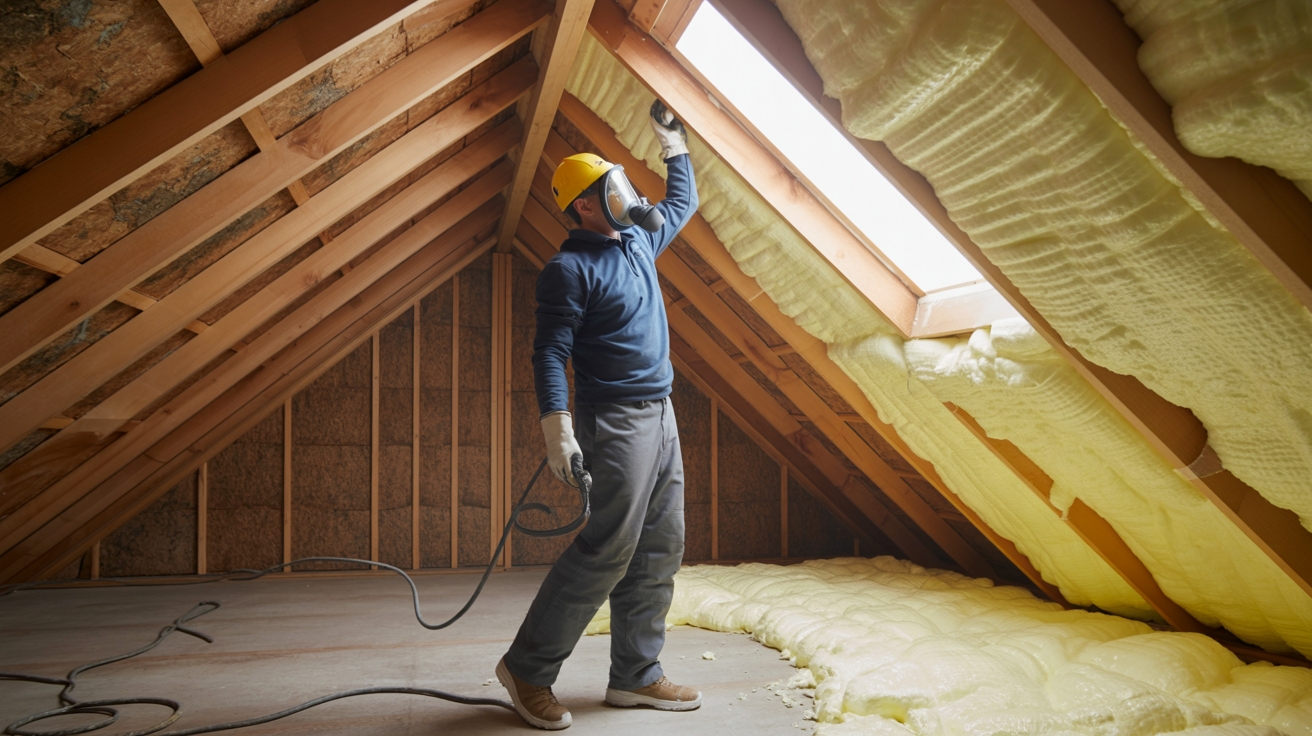
Spray Foam Removal Chelsea
Call us on 020 4515 6256
Spray foam is a unique insulation product that has gained popularity in a variety of applications in residential and low-rise commercial buildings in Chelsea over the past 40 years. Spray foam insulation is created by mixing two liquid resins and a blowing agent and spraying it onto prepared surfaces from a truck—or trailer-mounted rig or a portable self-contained unit. In the installation process, spray foam expands and quickly reacts to form a rigid, thermoset foam that adheres to structural surfaces, creating a continuous insulating air barrier that seals cracks and joints.
Spray foam is highly energy efficient, reduces air leakage into or out of building spaces, prevents drafts that can cause occupant discomfort, minimises ice damming in colder climates, reduces exposure to combustion emissions in indoor air, and dampens noise. While relatively few Chelsea homes are built or remodelled with spray foam, many are retrofitted for improved energy efficiency.
Spray foam insulation and air barrier products are divided into two categories: open and closed foam. Both open- and closed-cell foams are classified as either low density, for use in interior wall cavities or at the underside of roofs/attics; medium density, for use in attics versus sealing gaps or small openings in air barriers; or high density, for use in sealing gaps or small openings. Low-density open-cell foams are soft and can be compressed by hand. Medium-density closed-cell foams are relatively rigid and can be used for continuous insulation on building exteriors; higher-density closed-cell foams can serve as air or water-resistant barriers.
London Spray Foam Removal Specialise In:
Safe Spray Foam Removal in Chelsea – Fully certified extraction without damaging roofing structures.
Damp & Moisture Resolution in Chelsea Homes – Fix condensation issues and prevent mould growth.
Mortgage Compliance – Restore your roof to Chelsea lender standards for hassle-free sales.
Alternative Insulation Solutions – Offer energy-efficient, breathable replacements in Chelsea.
Chelsea Spray Foam Removal
If your home in Chelsea has Isocyanate Polyol please contact us. Isocyanate Polyol is a conventional long-chain resin or polymer used in various forms of polyurethane foam products available on the market today. Some polyols are derived from renewable resources, like corn and soy. Most polyols, however, are made with non-renewable resources derived from petroleum products, like propane and ethylene oxide. Polymeric isocyanate is always the same and is manufactured from petroleum.
During installation, the polyol and isocyanate are blended in a series of heated and pressurised hoses before being sprayed through a special spray nozzle. After spraying, the foam expands, often ten to twenty times the original volume, and hardens into a solid insulating material. The explosive expansion is the key feature since it allows the foam to fill narrow crevices and contours, making it an exceptional air barrier product. The chemical reaction generating the heat also assists in expansion and drying in colder weather.
